
The AI Course Alignment tool is a constantly evolving AI based tool that makes use of large language models to analyze and compare instructional artifacts with the explicit goals of improving overall quality of the artifacts and encouraging instructional conversations. Faculty are able to upload their course artifacts in a workspace designated for their program and conduct a variety of explorations on individual and/or groups of artifacts.
What can you do with the tool?
- Analysis of Syllabus - overall comments, key strengths, areas for improvement, things to note, teaching and learning approach and recommendations.
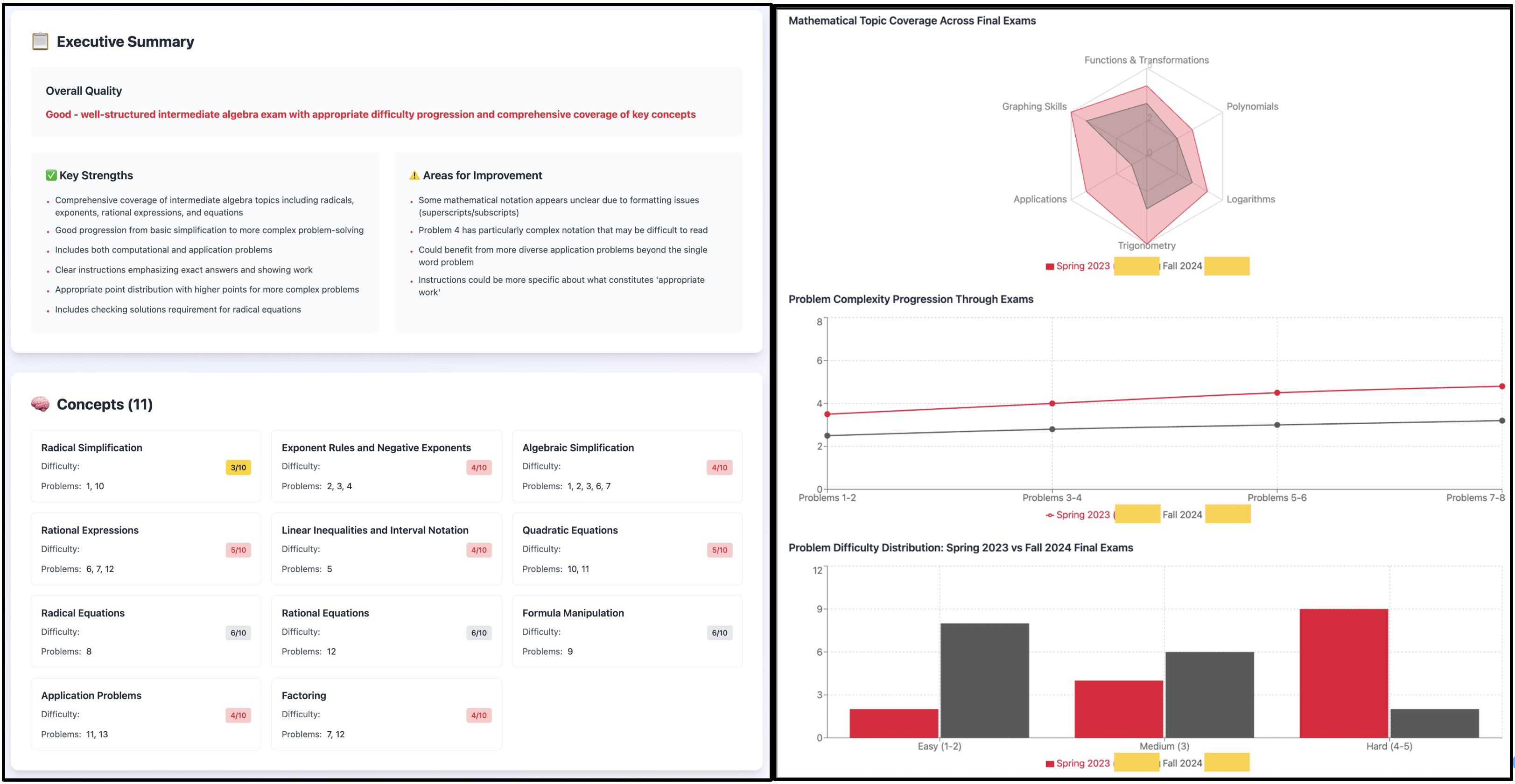
- Analysis of quiz/exam - overall comments, key strengths, areas for improvement, content overlaps, things to note, concepts and difficulty, topical coverage by problem, problem analysis with difficulty and time estimate, teaching and learning approach, total time and recommendations to guide improvements.
- Bulk Analysis of course assessments - overall comments, key strengths, areas for improvement, content overlaps, things to note, primary and secondary learning objectives, point distribution by learning objective, teaching and learning approach, and recommendations
- Document Comparison between assessments - overall similarity and critical differences, document structures, comparative difficulty distributions/cognitive demand/assessment emphasis, concept coverage analysis, shared and unique concepts, problem by problem concept analysis, pedagogical insights and recommendations. Supports coordinating assessment coverage with and between semesters at the individual and multiple instructor levels
- Exam vs Grades Comparison - document identification, performance summary, question level analysis including difficulty and concepts tested, difficulty distribution, statistical validity and reliability, pedagogical insight, key strengths and weaknesses, recommendations and suggested instructor actions. Extracts key insights from student performance on a conceptual level.
- Feedback Analysis - analyze course evaluation reports extracting the four main themes, with representative quotes, students express in each of the two long-response questions. Can look at responses over a series of course offerings to extract longitudinal changes. Can also analyze any question with open ended responses extracting four main themes and representative quotes.
Current/Potential Outcomes
- Improved syllabi that cover key elements of the course and provide a comprehensive student centered guide.
- Pedagogical and content support for early career instructors. This has been stated by multiple math instructors during their tool training.
- Improved quizzes, exams with less typos, clearer instructions/readability, balanced complexity. Chemistry and math instructors have commented on their improved tests after running their drafts through the tool.
- Improved faculty conceptual and thematic insights from student performance on graded exams. Several chemistry faculty have remarked on this and are instituting changes in the course exams.
- Exam and assignment difficulty consistency improvements between instructor course offerings over time, between instructors teaching the same course. This was observed in an early math course and the differences between instructors showed a link to student outcomes. This has led to conversation and future changes.
- Greater sense of community and coherence between instructors teaching the same course.
- Enhanced consistency in course learning objectives within course offerings.
- Enhanced understanding of the student voice via student feedback analysis.
Users
- Faculty teaching courses.
Accessing Tool
- To access the tool you need to attend a short training session to learn the basics of the tool and then you are off and running! Sign up for your training session.