
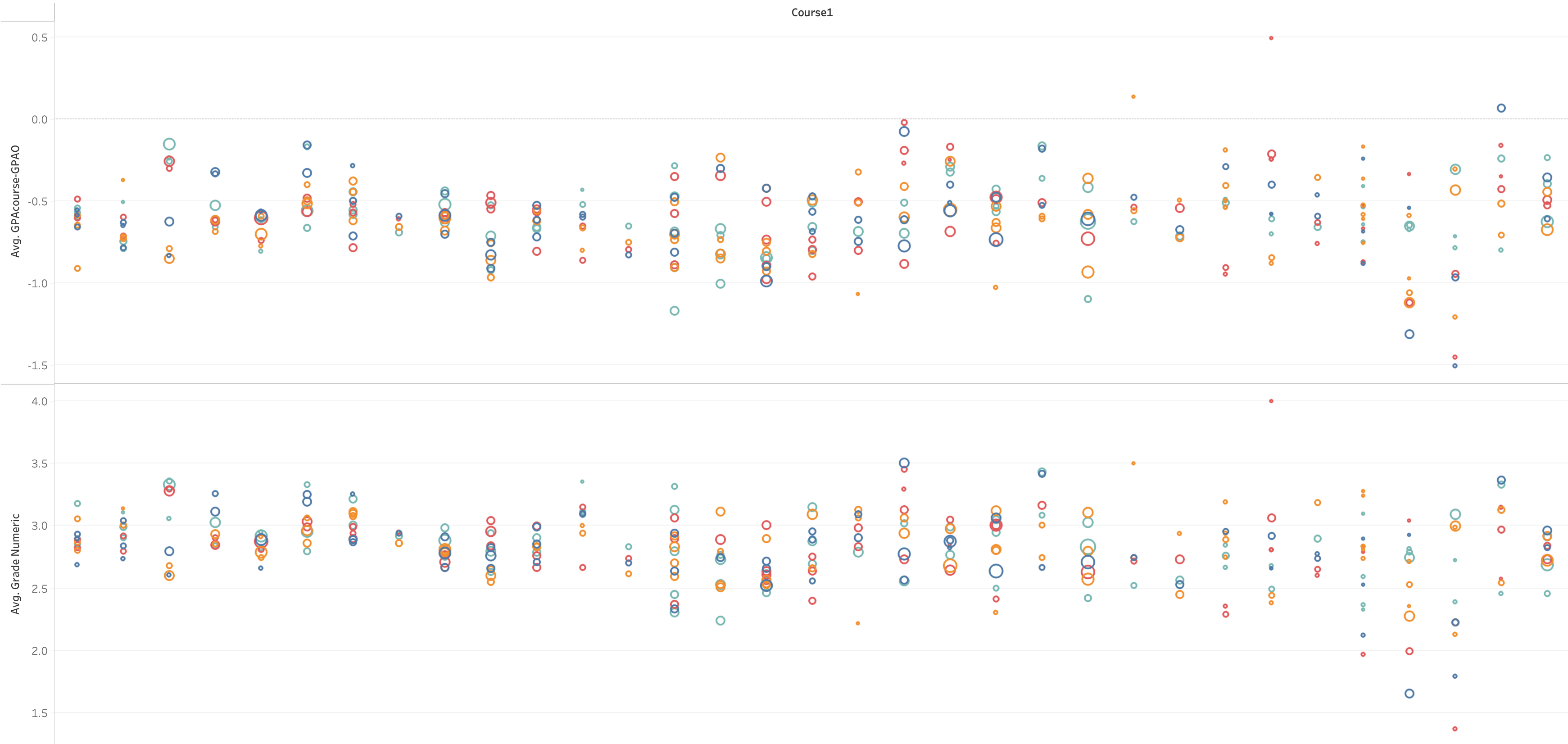
Custom analyses allow for an in-depth exploration of an observed pattern, discovery of a previously unknown set of student outcomes, investigation on the impact of a pedagogical change on student success, understanding of individual course/section outcomes over time disaggregated by demographic characteristics, as well as numerous other situations arise where custom analyses are critical. The data analyzed is often quantitative but can also include qualitative data such as analysis of large numbers of student comments on course evaluations.
What are examples of questions you can address through custom analyses?
- Determine if a course challenges specific student subgroups (e.g., transfer students) to implement targeted interventions.
- Assess the impact of pedagogical changes on improving outcomes and reducing equity gaps.
- Investigate student challenge patterns in programs via detailed course pathway analyses.
- Summarize primary themes from large volumes of written student comments.
- Monitor downstream effects of early prerequisite course outcomes.
- Link UMD outcomes (e.g., graduation) with post-degree data (e.g., employment surveys).
Current/Potential Outcomes
- Pedagogical improvements: Adoption of successful changes, like the introductory economics grading change that reduced gaps and improved passing rates (being disseminated widely).
- Targeted support: Identifying courses problematic for specific student groups, guiding deeper investigation, and allocating instructional innovation or TLTC resources.
- Clearer student feedback: Better understanding of feedback themes over time for courses or instructors (requested by Chemistry DUG and Engineering's Ken Kiger).
- Enhanced post-graduation support: Pending analysis for the College of Information linking pre-graduation support to post-graduation outcomes.
Users
- Faculty, program/department leadership (directors, chairs, deans), and special grant program directors.
Requesting Custom Analyses
- Custom analyses start with a conversation with Marco Molinaro to gauge the possibilities and feasibility of you request. Depending on the nature of your request it may be resolved in one meeting or may result in a multi-year collaborative project involving involving multiple partners. Fill out a consultation request by selecting the button below.