
Teaching & Learning Transformation Center
About Us Instructors TA/GAs Students Educational Effectiveness
About Us
Citations Contact Us Digital Badging Meet the Team Mission Strategic Areas TLTC Newsletter Sign Up TLTC Room Reservations
Instructors
Communities Consultations Course Design Support Emergency Closures & Instructional Continuity GenAI in Teaching Resources Spring Symposia Teaching Innovation Grants Overview Technology TLTC Teaching Academy Workshops
TA/GAs
Orientation to Teaching Peer Mentors (AMP) Teaching & Learning Program (UTLP) Teaching Resources Workshops
Students
Academic Coaching Become a Learning Leader Campus Resources Get Help with a Class Guided Study Sessions Learning About Learning Math Success Program
Educational Effectiveness
Course Inquiry Starter Kit (TLTC) Custom Analyses Guided Tools Self-Service Tools
Citations Contact Us Digital Badging Meet the Team Mission Strategic Areas TLTC Newsletter Sign Up TLTC Room Reservations
Communities Consultations Course Design Support Emergency Closures & Instructional Continuity GenAI in Teaching Resources Spring Symposia Teaching Innovation Grants Overview Technology TLTC Teaching Academy Workshops
Orientation to Teaching Peer Mentors (AMP) Teaching & Learning Program (UTLP) Teaching Resources Workshops
Academic Coaching Become a Learning Leader Campus Resources Get Help with a Class Guided Study Sessions Learning About Learning Math Success Program
Course Inquiry Starter Kit (TLTC) Custom Analyses Guided Tools Self-Service Tools
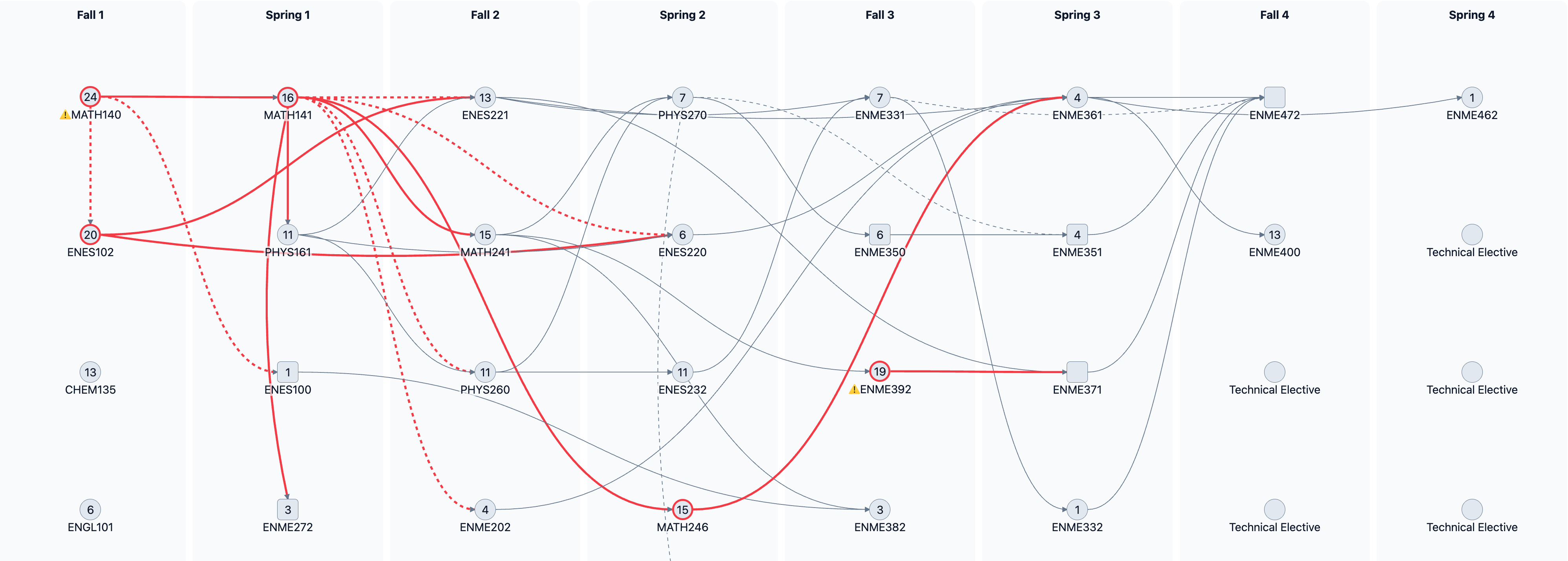
map showing recommended courses by semester and the pre-requisite and co-requisite courses connected by lines

Curricular Complexity

The Curricular Complexity tool visualizes course interconnections in 2- and 4-year plans, showing pre/co-requisites, DFW rates, course timing, and problematic paths. Access requires campus authentication and ad-hoc program file access.

What can you do with the tool?

  • Identify student bottlenecks in program sequences.
  • Assess timely graduation impact from course repeats.
  • Model effects of course requirement changes (addition/removal).
  • Gauge feasibility of suggested degree plans based on course timing.
  • Could help students visualize 4-year plans.

Current/Potential Outcomes

  • Simplification of program requirements.
  • Changes to pre/corequisite requirements or course offering times.
  • Targets courses for improvement due to progression impact.
  • Models program changes to assess complexity shifts.

Users

  • Undergraduate Program Directors and Department Chairs.
  • Asst/Assoc Deans investigating program overlaps/shared course blocks.
  • Advisors discussing requirements (with permission).
  • Faculty groups developing new academic programs.

Teaching & Learning Transformation Center
4131 Campus Drive, College Park, MD 20742, USA
tltc@umd.edu 301-405-9356